
Most service businesses in Cyprus start out managing technicians the simple way — over WhatsApp. It costs nothing, everyone already knows how to use it, and setting it up takes minutes. A customer sends “my AC isn’t cooling,” the dispatcher forwards the message to the nearest technician, and the job gets done.
That setup holds up fine with one or two technicians. But once the team grows past a handful, cracks start to show: messages slip through, nobody can say where a technician actually is, and invoices lag days behind the work. This is the gap technician management software closes — and why more Cyprus service businesses now reach for it as they scale.
Where WhatsApp Breaks Down as You Grow
Messages Get Buried
A customer reports a leaking pipe at 7:34 a.m. By mid-morning, the thread has moved on, and dozens of new messages bury the photo of the problem. A solo operator can live with scrolling back to find it. A business juggling requests from several customers at once can’t — that scroll costs real time, and it carries real risk, since one accidental delete wipes a thread for good.
There’s No Structured History
Conversations scatter everywhere: the owner’s personal WhatsApp, individual technician chats, separate customer threads. No single place holds what a technician fixed last visit or what the business promised a customer. Six months later, that customer calls back, and the business starts from zero. Repeat service turns into guesswork, and old disputes over discounts or warranties resurface with no record to settle them.
Nothing Reminds Anyone of Anything
An office manager confirms a 5 p.m. appointment by message. But the system stops there — nothing follows up later. Someone has to remember, by hand, every single time, and under real work pressure, that’s exactly the kind of thing that slips.
Technician Location Stays Invisible
The moment a job gets assigned, it vanishes into the message stream. Nobody can see whether a technician reached the site, how far along the job runs, or which technician sits closest when a new emergency call comes in. Finding out means messaging every technician one by one and waiting for replies. HVAC crews feel this hardest — in Cyprus summer heat, a broken AC turns into a same-day emergency, and a wrong ETA guess costs the business a customer.
Read more: Free HVAC Field Service Software: What’s Actually Free in 2026?
Invoicing happens separately, and late. With no connection between the chat and the accounting system, invoices often get created at the end of the day rather than the moment a job finishes — delaying cash collection and creating more room for disputes over what was actually done.
What Growing Service Businesses Actually Need
WhatsApp and Telegram handle quick personal messages well. They were never built to run field service management software at scale. Past a few technicians, three capabilities start to matter more than convenience.
1. Simple, Centralized Scheduling
A shared calendar — the backbone of any job scheduling software — replaces scattered chat threads with one place to see every job, sorted by technician, day, or status. Dispatchers drag and drop assignments instead of typing them out, and the app notifies technicians automatically, so nothing depends on someone remembering to forward a message.
Read more: How Job Scheduling Software Helps Small Service Businesses in Cyprus Manage Daily Jobs
2. Clear Job Status Tracking
A shared dashboard shows live status for every job — New Request, Scheduled, Technician En Route, On Site, In Progress, Completed — so nobody has to guess. Managers spot a job running late and step in before it delays the next appointment. Dispatchers can finally answer “how far out is my technician?” with a real answer instead of a shrug.
3. Faster, Connected Invoicing
Invoicing takes two steps: the technician marks the job complete, and the software generates the invoice straight from the job data it already captured — labor, parts, time. No one re-enters anything. The invoice goes out by email immediately, and the technician can collect payment before leaving the site.
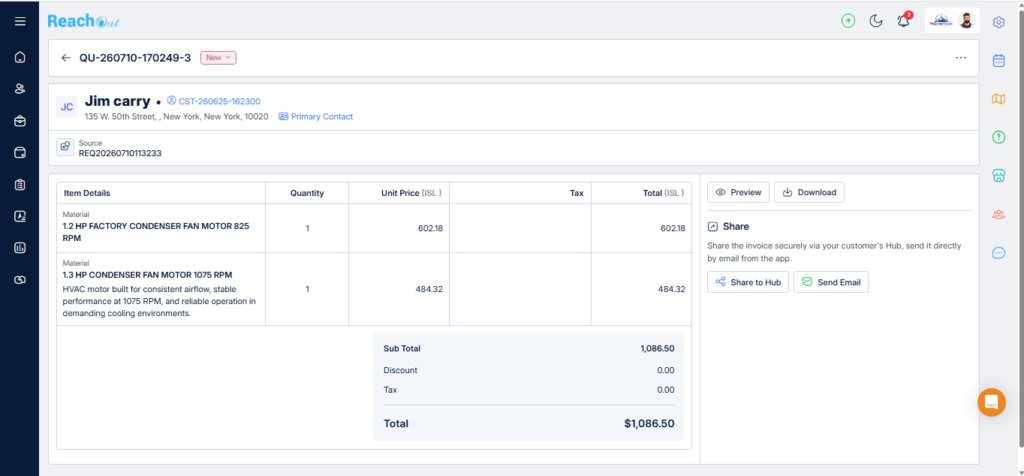
See the difference a shared system makes. Start a free trial of ReachOut and run a week of jobs through one platform instead of a chat thread.
Why One Shared System Changes the Math
A single system cuts out the back-and-forth that eats up a manager’s day. Technicians get what they need without waiting on a reply. Managers see every job’s status without asking anyone. And because scheduling, tracking, and invoicing all pull from the same data, nobody re-enters or reconciles anything by hand.
ReachOut builds for exactly this shift — a cloud-based platform that brings scheduling, tracking, and invoicing into one place instead of scattering them across three or four disconnected tools.
Frequently Asked Questions
What are the main challenges of using WhatsApp for business communication in Cyprus?
Messages get lost in long threads. There’s no reliable history to check for repeat customers. Technician location and job status stay invisible in real time, and invoicing happens separately from the job — often hours after it wraps.
What are the advantages of technician management software over WhatsApp?
It moves scheduling onto one shared calendar instead of scattered messages, shows every job’s status without anyone asking, and generates invoices straight from the job data — cutting the delay between finishing a job and getting paid for it.
When does a service business typically outgrow WhatsApp?
Most businesses feel it once they’re coordinating more than two or three technicians at once. That’s when lost messages, unclear job status, and delayed invoicing stop being occasional annoyances and start costing real time and money.
Digitize your field service operations from scheduling to invoicing with ReachOut. Connect your technicians with the companion mobile app to execute jobs and reduce paperwork in the field. Try ReachOut now and give your customers the fast and quality service they deserve.
Get Started

Liji Raj
Liji is a passionate enthusiast in field service management, bringing a wealth of knowledge and enthusiasm to the industry. With a keen interest in optimizing service operations and improving field service efficiency, Liji is committed to sharing insights and best practices that empower businesses to excel in their service delivery.
More posts by Liji Raj
Related Posts

6 Points to Remember While Commencing and Sustaining a Fire Extinguisher Business
A Handy Guide to Kick-Starting and Running a Fire Extinguisher...

Why Are Property Managers Switching to Digital Field Service Software?
Property managers juggle multiple jobs. They have to coordinate with...

Top 20 Field Service Management Trends for 2026
However, 25% of field service enterprises still use spreadsheets,...