
A Handy Guide to Kick-Starting and Running a Fire Extinguisher Business
All commercial establishments, homes, warehouses, public places, and vehicles require fire extinguishers. But this does not guarantee the success of a fire extinguisher business. Fire protection companies can remain successful only when they start the business with a coherent plan and do the right things. This guide will help you understand the ways to succeed in running a fire extinguisher service. The global fire extinguisher market was valued at roughly $5–7 billion in 2026 and is projected to keep growing at a mid-single-digit annual rate through the early 2030s, driven largely by regulatory compliance mandates and infrastructure growth — a resilient backdrop for new entrants who start with the right plan.
Read more: 10 Factors to Consider While Choosing a Safety Management Software
1. Prepare a business plan
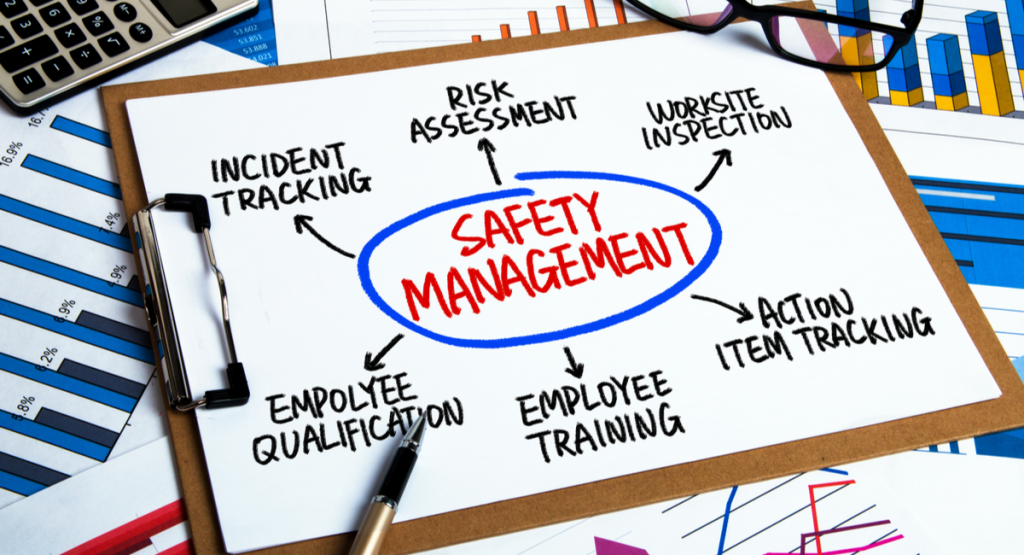
As the first step towards starting a fire extinguisher business, prepare a thorough market analysis. Identify the target customer base, and check out the competition vis-à-vis the target customer base. Consider how the new company can offer competitive differentiation. Next, prepare a business plan based on market analysis. Consider the services to offer. Fire extinguishers are a one-time purchase. The sustainability of the business rests on after-sales service, value add-ons, and upstream or downstream integrations. If the target area is residential, the new company could focus on a relatively new domestic market. Make the business plan comprehensive. Co-opt the management structure, detail the finances, and draw up a marketing and sales strategy. Prepare a blueprint of the business operations to the business plan.
Typical startup costs
These are general planning estimates — actual costs vary by state, equipment condition (new vs. used), and service scope:
| Category | Estimated Cost Range |
| Business registration & licenses | $300 – $2,500 |
| Insurance (first-year premiums) | $1,000 – $3,000 |
| Testing & service equipment (hydrostatic tester, recharge station) | $8,000 – $25,000 |
| Service vehicle (used, outfitted) | $15,000 – $35,000 |
| Initial inventory (extinguishers, parts, tags) | $4,000 – $12,000 |
| Marketing & branding | $1,000 – $4,000 |
| Service management software | Varies by provider and plan |
Total estimated startup investment: roughly $30,000 – $80,000, depending heavily on whether you buy equipment new or used and how much territory you plan to cover from day one.
Next steps to take:
- Draft a preliminary budget using the ranges above
- Get quotes from at least two equipment suppliers
- Decide whether to lease or buy your service vehicle
2. Gain conceptual acumen
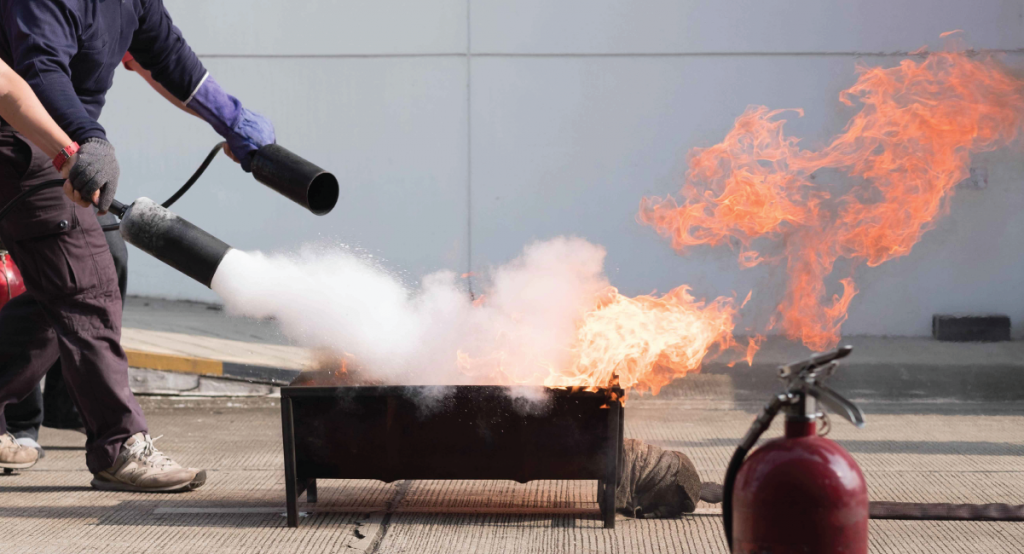
The fire extinguisher business is technical. Success in the industry depends on knowing which fire extinguisher to use and how to repair or service each type of equipment. There are different fire extinguishers.
- Class A fire extinguisher is for fire from paper, cloth, and plastics.
- Class B fire extinguishers are for fire from oils, grease, and paints.
- Class C fire extinguishers put off fires from electric sources.
- Class D fire extinguishers suit fires breaking out from combustible metals.
- Dry fire extinguishers serve domestic purposes to put off small fires.
In the USA, the Occupational Safety and Health Administration lay down standards for fire safety in the workplace. These standards stipulate the number of fire extinguishers per square foot, annual inspections, maintenance checks, hydrostatic testing, specifications on recharging the extinguishers, training the workforce, and more. Gain resources from sources such as the National Fire Protection Association. Prepare documentation regarding the type of extinguishers suitable for each specific premise and use. Make sure the fire extinguisher service complies with such stipulations.
Institute a knowledge repository, accessible to the rank-and-file employees, quickly. Make it available through the field management suite. Novice field agents could easily access the repository and instantly take the right decision without follow up. Likewise, customer support agents could refer to the knowledge base to address customer queries.
Next steps to take:
- List out the extinguisher classes (A, B, C, D) most relevant to your target customer segment
- Pull the current OSHA and NFPA standards documentation for your service area
- Set up a shared knowledge repository your field agents can access on mobile
Read more: Fire Prevention Vs. Fire Protection: How ReachOut Can Enable Effective Fire Prevention
3. Comply with legal and financial requirements
Register the business legally. Find out the exact requirements for the state and the local area from the Small Business Administration. Any new business would need:
- General business license, by registering the company with the county clerk or other officially designated authority.
- State sales tax license
- Federal and state employee identification number and tax license
- Fire extinguisher service might require a minimum mandated insurance amount
- Bank accounts
- Small business loan, if start-up capital is inadequate
Many states regulate the sale and service of fire extinguishers. Get the required licenses. For instance, the US Department of Transportation offers a hydrostatic testing permit to service high-pressure fire extinguishers. Servicing portable extinguishers or low-pressure extinguishers requires a Class A hydrostatic testing certificate. Approach the State Fire Commissioner and local fire marshals for the precise licensing requirements in the operations’ targeted area.
Insurance you’ll need
Fire extinguisher servicing carries real liability exposure, so a generic small-business policy usually isn’t enough. Plan for:
- General Liability — covers property damage or injury at a client site. National averages for small businesses run roughly $500–$1,500 per year for a standard policy, though field service and contracting work typically sits toward the higher end of that range given on-site equipment handling.
- Professional Liability / Errors & Omissions (E&O) — protects you if an extinguisher you serviced fails; commonly bundled with general liability for contractors.
- Commercial Auto — required for your service vehicle; personal auto policies won’t cover business use.
- Workers’ Compensation — required in most states once you hire your first employee; premiums vary by state and payroll size.
Get quotes from a broker who specializes in fire protection or field service contractors — rates vary significantly by state, claims history, and coverage limits, so a national average is only a starting reference point.
Next steps to take:
- Request quotes for a general + professional liability bundle
- Confirm your policy covers accidental discharge and equipment failure
- Get a commercial auto quote before your vehicle goes into service
Download FREE GUIDE: Compliance Risk Assessment for Fire Safety
4. Set up the required infrastructure
Set up the required infrastructure to operate the business.
- Set up an office to coordinate operations and as a command-and-control center
- Have secure warehouses to store fire extinguishers and other supplies
- Procure commercial vehicles and testing equipment to get the job done
- Source uniforms, safety kits, signage, exit lights, and other accessories
- Buy consumables such as office supplies, first aid kits, batteries, etc.
- Train the workforce. The National Fire Protection Association, an international non-profit organization, offers several training and certification programs.
The type and nature of the infrastructure need to be based on the business plan. For instance, if the new business enters into a contract to repair and maintain fire extinguishers, the firm should purchase a vehicle to transport the cylinders, recruit field agents to collect the cylinders, and hire technicians to repair the cylinders.
Next steps to take:
- Confirm zoning rules for storing pressurized cylinders and chemicals at your chosen location
- Get quotes for a commercial vehicle and testing equipment
- Identify NFPA training/certification programs for your technicians
5. Set up inventory management system
The success of a fire extinguisher business depends on efficient inventory management. Identify a list of vendors. The state fire commissioner has a list of registered wholesale suppliers of firefighting equipment. In today’s uncertain business environment, marked by COVID-19 lockdowns and other disruptions, it makes sense to have multiple vendors and source supplies from two or more vendors simultaneously.
Develop an inventory management software and sync it to the field management suite. Make sure the field agents go to service a location with adequate fire extinguishers and supplies. This improves the chances of closing the sale immediately and making prompt repairs.
Next steps to take:
- Get in touch with the state fire commissioner’s list of registered wholesale suppliers
- Set up accounts with at least two vendors to avoid single-source supply risk
- Sync your inventory tracking with your field management suite before your first job
6. Adopt a comprehensive field service management suite

Profits are wafer-thin in today’s highly competitive business environment. The key drivers of profits are innovation and internal efficiency. A field service software is indispensable for a fire service start-up. Purpose-built Fire Safety Management Software boosts internal efficiency, accelerates delivery of service, and boosts customer satisfaction.
Read more: How Fire & Safety Industry Can Improve Efficiency With Field Service Management Software
A good field management software includes:
Quoting & Estimation: Quote service costs, send them directly to customers via email, and keep things organized. Turn approved quotes into work orders or inspections with one click.
Scheduling: Keep it simple with a drag-and-drop scheduler — assign jobs effortlessly, saving valuable time and adding flexibility to your workflow.
Dispatching: Check your technicians’ workloads and schedules in advance, then dispatch them to sites armed with the latest job and customer details.
Inventory Management: List out and organize parts for quick access, guarantee stock availability, allocate them to technicians for use in jobs, and handle returns with zero hassle.
Inspections & Audits: Run onsite inspections and audits with predefined checklists, capture data instantly on mobile, and flag non-compliance in real time.
Digital Forms: Replace paper forms with digital forms — attach photos, tag and annotate them, and customize forms quickly.
Invoicing and Payments: Create invoices right after job completion and collect contactless payments on the spot, even offline at job sites with no network.
Field Service Mobile App: Give technicians a field service mobile app that works on Android and iOS, syncs offline data on reconnection, and lets them manage jobs, forms, and invoices from the field.
By signing up for the ReachOut suite, field agents, supervisors, managers, and even customers can access intuitive field service mobile apps with neat UI, making engagement easy. A good field service management software is easily scalable to expand as the business grows. It would also co-opt franchisees seamlessly if the company goes that route.
Fire protection companies are an essential and evergreen business. Good preparation, with an attention to detail and a focus on delighting the customer, guarantees success.
Read more: Fire Safety Inspection: A Complete Checklist
Plan Your Growth
As your customer base grows, a few benchmarks help you scale without sacrificing service quality. Fire extinguisher technicians in the U.S. earn a median salary of roughly $48,000–$53,000 per year, with experienced technicians in higher-cost states earning up into the high $50,000s to low $60,000s — useful context when budgeting for your first hire and deciding when growth justifies adding headcount. Beyond payroll, track your on-time arrival rate and customer callback/rework rate as early indicators of whether your quality control is keeping pace with growth — both tend to slip first when a business scales faster than its systems.
Next steps to take:
- Budget for technician pay in line with current market rates in your state
- Start tracking on-time arrival and callback rates from your very first jobs
- Run periodic spot-checks on completed jobs against NFPA 10 requirements
Land Your First Customers
Technical expertise and the right equipment won’t generate revenue on their own — you need a plan to get in front of the businesses that need your services.
Start locally. Property managers, restaurant owners, warehouse operators, and facility managers are your core early customers. Direct outreach works well in this industry: build a list of 50–100 local businesses and reach out by phone or a short introductory visit. Many first contracts in this industry come from relationships with local fire marshals and AHJs (Authorities Having Jurisdiction), who often field questions from businesses looking for compliant service providers.
Set up a Google Business Profile early — it’s free, and it’s how most local commercial clients will find you when searching for fire extinguisher inspection or service near them. Once you complete your first few jobs, ask satisfied customers for reviews; a handful of strong reviews meaningfully increases inbound calls.
As you grow, a modest local Google Ads budget (roughly $300–500/month) targeting terms like “fire extinguisher inspection in US” can supplement direct outreach with consistent lead flow.
Next steps to take:
- Build a target list of 50 local businesses to contact this month
- Set up and verify your Google Business Profile
- Ask your first five customers for a review after service
Are you looking for robust field service software to manage your fire extinguisher business? Try ReachOut today.
Frequently Asked Questions
How much does it cost to start a fire extinguisher business?
Startup costs typically range from $30,000 to $80,000, covering licensing, insurance, testing equipment, a service vehicle, and initial inventory — actual costs depend heavily on your state and whether you buy equipment new or used.
What licenses do I need to start a fire extinguisher business?
Requirements vary by state — you’ll typically need a general business license, state sales tax license, and hydrostatic testing permits/certificates from the US Department of Transportation. Check with your State Fire Commissioner and local fire marshal for specifics.
Is a fire extinguisher business profitable?
Yes — the recurring nature of after-sales service, inspections, maintenance, and hydrostatic testing creates predictable revenue beyond one-time equipment sales.
What’s the biggest challenge when starting out?
Winning your first contracts. Most new businesses rely on direct outreach to property managers and facility managers, combined with a Google Business Profile, to build initial momentum.
Which is the best FSM for a fire extinguisher business?
The right FSM software depends on your business size and workflows, but look for a platform that covers quoting, scheduling and dispatching, inventory management, inspections and digital forms, and invoicing in one place. ReachOut Suite is built specifically for fire and safety service businesses, bringing all of these capabilities into a single mobile-first platform so you can run inspections, manage compliance, and get paid faster without juggling multiple tools.
Digitize your field service operations from scheduling to invoicing with ReachOut. Connect your technicians with the companion mobile app to execute jobs and reduce paperwork in the field. Try ReachOut now and give your customers the fast and quality service they deserve.
Get Started

Ashmitha Chatterjee
Ashmitha aspires to enhance the efficiency of service technicians. With a unique perspective on the challenges and opportunities within field service management, Ashmitha frequently shares her knowledge through industry blogs, articles and workshops.
More posts by Ashmitha Chatterjee
Related Posts

Why Are Property Managers Switching to Digital Field Service Software?
Property managers juggle multiple jobs. They have to coordinate with...

Top 20 Field Service Management Trends for 2026
However, 25% of field service enterprises still use spreadsheets,...

Tackling Winter Field Service Challenges With ReachOut
Field service management in winter becomes a juggling act....